Quick answer
The Mediterranean lifestyle for perimenopause isn't a diet plan, it's a daily rhythm built around real food, slower meals, regular walking, and enough rest. Living it in Portugal at 44, I've found the biggest relief doesn't come from one ingredient or supplement. It comes from the whole pattern, and that pattern travels. You don't need to live near the sea to use it.
If you've searched anything like "Mediterranean diet perimenopause" or "how to feel better naturally in perimenopause," you've probably landed on ten different lists of foods to eat and foods to avoid. Some of that advice is useful. A lot of it is generic, written by people who've never actually lived the lifestyle they're describing.
I'm writing this from Portugal, where I've lived for several years and where I am, right now, 44 and a half years old and in the middle of my own perimenopause. I don't have a medical degree. What I have is a daily life built around the habits this article is about: the long lunches, the walking instead of driving everywhere, the fish market, the afternoon slowdown that nobody apologizes for. This isn't theory to me. It's Tuesday.
This article is the hub for everything I write about perimenopause and the Mediterranean lifestyle on this site. Think of it as the map. Each section below links to a deeper article on that specific piece.
In this guide
- What does "Mediterranean lifestyle" actually mean for perimenopause?
- Can the Mediterranean diet help with hot flashes and mood swings?
- What do women in Portugal actually eat every day?
- Does perimenopause movement have to mean intense workouts?
- Why does rest matter as much as food during perimenopause?
- How can you start living this way if you don't live near the Mediterranean?
- The bottom line
- FAQ
What Does "Mediterranean Lifestyle" Actually Mean for Perimenopause?
It means the combination of what you eat, how you eat it, how much you move, and how much you rest, modeled on the daily patterns actually practiced in countries like Portugal, Spain, Greece, and Italy, not the marketing version sold in cookbooks.
Most people hear "Mediterranean diet" and picture olive oil and salmon. That's part of it, but it's a small part. What I've noticed living here is that the food is almost the easy part to copy. The harder, more valuable part is the rhythm around it: meals that take an hour, not fifteen minutes; a culture where a walk after dinner is normal instead of a fitness goal; an afternoon lull where shops close and nobody treats that as laziness.
For perimenopause specifically, that rhythm matters because so many of the symptoms this transition brings — fatigue, disrupted sleep, mood swings, brain fog — are made worse by the pace most of us were living before: rushed meals, constant stimulation, little real rest, and exercise treated as another task to grind through. The Mediterranean lifestyle doesn't fix hormones. It removes some of the daily friction that makes hormonal symptoms harder to carry.
If you want the fundamentals of perimenopause itself before going further, start with What Is Perimenopause? A Clear, No-Panic Guide to the Transition (coming soon).
Can the Mediterranean Diet Actually Help With Hot Flashes and Mood Swings?
Some research suggests it can help with symptom severity for some women, but it isn't a guaranteed fix, and hot flashes aren't a symptom I personally deal with. I'd rather tell you that honestly than pretend a plate of sardines cured something I haven't experienced myself.
What the research does show is more modest and more believable than most headlines suggest. According to The Menopause Society (formerly NAMS), lifestyle factors including diet, weight, and physical activity can influence the frequency and intensity of vasomotor symptoms like hot flashes and night sweats for some women, though results vary widely from person to person. Diets higher in plant foods, fiber, and healthy fats — the core of the Mediterranean pattern — have been associated in some studies with somewhat lower symptom burden compared to diets high in processed food and added sugar.
Source: The Menopause Society (formerly NAMS), menopause.org
That's a far cry from "eat this and your hot flashes disappear." It's closer to "this pattern of eating gives your body fewer additional stressors to manage while it's already dealing with a hormonal shift." I go much deeper into what the research actually says, including where it's solid and where it's still thin, in The Mediterranean Diet and Hot Flashes: What the Research (and My Kitchen) Actually Show.
Mood is a different story for me personally, because it's one of the things I do experience. What I've noticed since living here — and I want to be careful to call this personal observation, not a clinical claim — is that regular meals with real food and a slower pace during the day leave me on steadier ground than the version of me who used to eat lunch at my desk in six minutes.
What Do Women in Portugal Actually Eat Every Day?
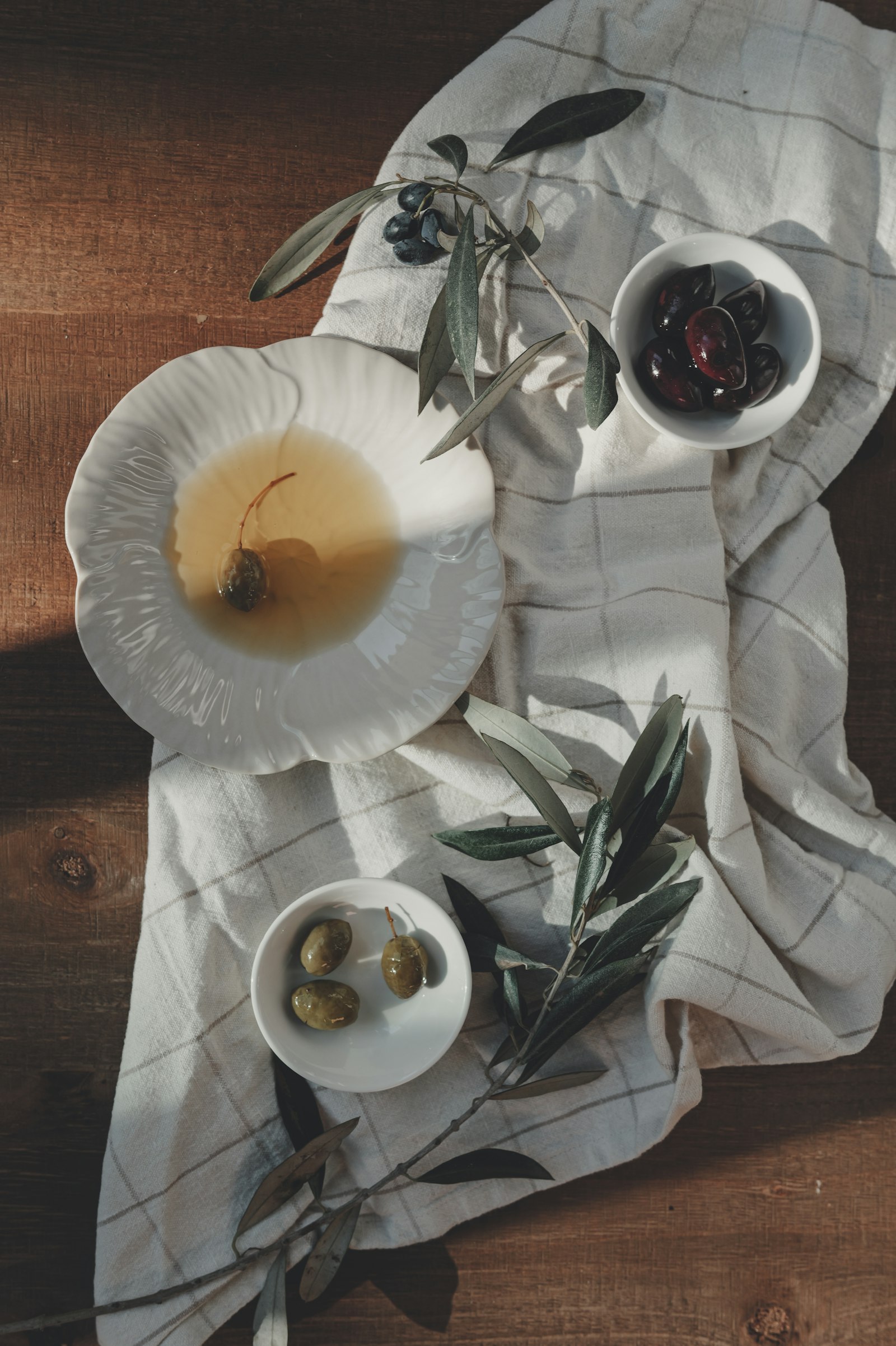
Simpler than the food blogs make it look: bread, olive oil, tomatoes, fish a few times a week, a lot of vegetables, fruit for dessert, and meat in smaller portions than most American plates. Almost nothing is labeled "diet food," because it isn't a diet here. It's just what's in the market.
A typical day for me looks like coffee and fruit in the morning, sometimes with bread and cheese. Lunch is the main meal, often fish or legumes with vegetables and olive oil, eaten sitting down, not standing at a counter. Dinner is lighter, sometimes just soup and bread. There's very little processed food in the regular rotation, not because anyone here is following a plan, but because fresh food from the market is the default, and the ultra-processed alternative is genuinely less convenient.
To make that less abstract: this past Tuesday, lunch was grilled dourada (sea bream, one of the most common fish at any Portuguese market stall) with boiled potatoes, a big pile of steamed greens, and a drizzle of olive oil straight from the bottle, no measuring. It took about 15 minutes to cook and I ate it sitting at my own table, not at a desk, with the windows open. That's not a recipe I looked up. It's just what the fishmonger had that morning, which is most of the reason this way of eating stays sustainable, there's very little deciding involved.
I break down a realistic day of eating, plus a shoppable list that works in a regular US or UK supermarket, in How to Eat Like You're in Portugal, Wherever You Live and Mediterranean Breakfast Ideas for Perimenopause Energy (both coming soon). If you want to understand why the pace of eating matters as much as the ingredients, read Olive Oil, Fish, and Slow Meals: The Mediterranean Eating Habits Nobody Talks About.
A note on products
I'm currently testing a few Mediterranean pantry and wellness products I'd consider recommending here, but I don't put anything in this box until I've used it long enough to stand behind it honestly.
Reserved for a recommendation once I've fully tested it →
If I ever link a product here, it will be an affiliate link, meaning I may earn a small commission at no extra cost to you. I only recommend things I've genuinely used.
Does Perimenopause Movement Have to Mean Intense Workouts?
No. Walking, done consistently and often, is a legitimate and well-supported form of movement during perimenopause, and it's the primary form of exercise in most Mediterranean countries, including where I live now.
A lot of the fitness content aimed at women in midlife right now pushes strength training as the only answer, and there's real evidence for why: muscle mass and bone density both decline faster after the hormonal shifts of perimenopause and menopause, and resistance training helps protect both. I'm not going to tell you to ignore that.
But the all-or-nothing framing, where anything short of lifting weights is treated as wasted effort, doesn't match how movement actually works in the Mediterranean pattern, and I don't think it matches most women's real lives either. Here, people walk to the market, walk after dinner, walk because the car isn't always faster than the legs. It adds up to a lot of daily movement without ever looking like "exercise." I go into the balance between walking and strength work, and why both have a place, in Walking, Not Workouts: The Mediterranean Way to Move Through Perimenopause (coming soon).
Why Does Rest Matter as Much as Food During Perimenopause?
Because perimenopause fatigue is a real, physiological experience, not a motivation problem, and a culture that treats slowing down in the afternoon as normal removes a layer of guilt that makes the fatigue itself harder to manage.
This is one I know personally. Fatigue is one of the symptoms I actually live with right now, and it's not the same as being sleepy. It's a heavier, more stubborn kind of tired that a nap doesn't always fix. What's been genuinely different for me here isn't a supplement or a trick. It's that when I need to sit down at 3 PM and do nothing productive, that's a completely unremarkable thing to do in this culture. Nobody raises an eyebrow. Shops are closed. Most days that looks like sitting on my balcony with a small coffee, not scrolling my phone, just watching the street go quiet for an hour before it starts moving again around 4. I go deeper into this, including what's genuinely different about fatigue in perimenopause versus ordinary tiredness, in Why Rest Is Part of the Routine: Slow Afternoons and Perimenopause Fatigue (coming soon).
Sleep itself is its own separate problem for a lot of us, hot flashes and night sweats aside, and I cover what's happening with perimenopause and sleep specifically in Perimenopause and Sleep: Why You're Suddenly Wide Awake at 3 AM, along with the brain fog that so often shows up alongside a bad night, in Perimenopause Brain Fog: Why It Happens and What Actually Helps (both coming soon).
How Can You Start Living This Way if You Don't Live Near the Mediterranean?
You don't need to move. You need three or four repeatable habits: cook one real meal a day, walk most days, sit down to eat instead of eating standing up, and give yourself permission to slow down without earning it first.
I want to be honest about something: it's genuinely easier to eat this way when the whole culture around you supports it. I'm not going to pretend that moving to Portugal is the advice here — that's not realistic and it's not the point of this site. The point is that the underlying habits are portable even when the culture isn't. A weekly trip to a real market instead of only the center aisles of a big supermarket. One slow, sit-down meal a day, even if the rest of your day is rushed. A daily walk that you protect the same way you'd protect a meeting. These are small enough to actually stick, which matters more than any perfect plan you abandon in three weeks.
If reworking your daily rhythm during this transition also has you rethinking bigger things — work, purpose, what the next chapter looks like — that's an extremely common thread for women in perimenopause, and I write about my own version of that shift in Starting Over at 44: Why Perimenopause Might Be the Push You Need to Reinvent Your Work (coming soon).
You Don't Have to Overhaul Your Life to Feel Better
Perimenopause already asks a lot of you. The last thing you need is another rigid plan with rules you'll break by Thursday.
What I can tell you, from actually living this way through my own transition, is that the small, repeatable pieces — real food, a daily walk, an actual sit-down meal, permission to rest — do more for how you feel day to day than any single "superfood" ever will.
Start with one piece. Add the next one when the first one feels normal. That's genuinely how it worked for me, and it's a far more honest promise than anything that claims to fix perimenopause overnight.
Frequently Asked Questions
Is the Mediterranean diet scientifically proven to help with menopause symptoms?
Research is promising but not definitive. Some studies link Mediterranean-style eating patterns to lower reported symptom severity, particularly for hot flashes and mood, but results vary between individuals and more large-scale research is needed. It should be viewed as a supportive habit, not a proven cure.
Do I need to eat exactly what people eat in Portugal or Greece for this to work?
No. The specific dishes matter far less than the underlying pattern: whole foods, olive oil as the primary fat, fish and legumes over processed meat, vegetables at most meals, and eating at a slower pace. You can build that pattern with ingredients from any regular supermarket.
Can I start the Mediterranean lifestyle if I already have a chronic health condition?
Talk to your doctor before making significant dietary changes, especially if you have diabetes, a heart condition, kidney issues, or take medication affected by diet, such as blood thinners. This article is educational and reflects personal experience and general research, not personalized medical advice.
How long does it take to notice a difference?
Most women who report improvements describe a gradual shift over several weeks to a few months, not an overnight change. Consistency in the daily pattern matters more than any single meal.
What if I don't have time for slow meals or daily walks?
Start with one non-negotiable habit rather than the full pattern at once. A 15-minute walk after your largest meal and one sit-down dinner a week are both realistic starting points that build from there.
Is this lifestyle only relevant to perimenopause, or does it help after menopause too?
The same habits are supported for general health at any life stage and are commonly recommended for women in postmenopause as well, particularly for heart health and bone density, both of which become higher priorities after estrogen declines.
This article reflects personal lived experience and general research and is intended for educational purposes only. It is not medical advice. Please talk to your doctor about symptoms, diagnosis, or treatment decisions specific to your health.
Sources referenced: The Menopause Society (formerly NAMS); National Institute on Aging (NIH).