

Quick answer
Waking in the middle of the night during perimenopause is usually hormonal, not random. Falling progesterone reduces a natural calming effect on your brain, and shifting cortisol and body-temperature patterns can nudge you awake at a similar time most nights, hot flash or not. It's common, it's explainable, and there are things that genuinely help.
Before perimenopause, I slept the way I imagine most people do: badly some nights, fine most nights, and never thought about it enough to write a sentence on the subject. Somewhere around 43, that changed. Not gradually, either. It was more like a switch: I'd fall asleep fine, and then wake up wide alert at almost exactly the same time, night after night, for no reason I could point to. No bad dream, no noise, no need to use the bathroom. Just suddenly, fully awake.
I don't have a medical degree, but this is one of the symptoms I actually live with, not one I'm researching from the outside. This article covers what's known about why it happens, what's still uncertain, and what's actually worked for me versus what I tried and quietly gave up on.
Perimenopause sleep at a glance:
| Question | Short answer |
|---|---|
| Why do I wake at 3 AM? | Falling progesterone and an earlier cortisol rise can pull you awake at a similar hour most nights, commonly between 2 and 4 AM. |
| Falling asleep or staying asleep? | Usually staying asleep. Perimenopause insomnia is most often a sleep-maintenance problem. |
| Can it happen without hot flashes? | Yes. Mild vasomotor activity can break up sleep even when you don't feel hot. |
| When should I see a doctor? | If it's new and persistent, or comes with snoring, gasping, breathing pauses, or daytime exhaustion. |
| Best-supported non-drug approach | Cognitive behavioral therapy for insomnia (CBT-I). |
| What helped me most | A fixed wake time, a cool dark room, no caffeine after about 1 PM, and not checking the clock. |
In this guide
- What's actually happening to sleep during perimenopause?
- Why does it always seem to be the same time?
- Can it be hormonal if I don't feel a hot flash?
- When is night waking worth mentioning to a doctor?
- What else can wake you up at night in your 40s?
- What actually helps, and what didn't work for me?
- Does what you eat in the evening affect sleep?
- The bottom line
- FAQ
What's Actually Happening to Sleep During Perimenopause?
Two hormones are doing most of the work: falling progesterone and fluctuating estrogen. Progesterone has a mild, natural sedative effect on the brain, acting on the same calming receptors as some anti-anxiety medications. As progesterone levels drop and swing unpredictably through perimenopause, that built-in calming effect becomes less reliable, which shows up less as trouble falling asleep and more as trouble staying asleep.
Estrogen fluctuation adds a second layer. Estrogen helps regulate the body's internal thermostat, and as it becomes erratic, your body's temperature control can misfire, which is the mechanism behind hot flashes and night sweats. But estrogen also affects serotonin and other systems tied to mood and sleep regulation more broadly, so the disruption isn't limited to nights when you actually feel hot.
According to The Menopause Society, sleep disturbance is one of the most commonly reported symptoms of the menopause transition, and it's frequently a sleep-maintenance problem rather than a falling-asleep problem, which matches what I and most women I've talked to actually experience.
Source: The Menopause Society, menopause.org
Why Does It Always Seem to Be the Same Time?
It's often tied to your cortisol rhythm, not a coincidence. Cortisol, the hormone that helps wake you up in the morning, naturally begins rising in the early hours before you're due to get up, as part of a normal daily cycle. During perimenopause, that rise can arrive earlier or more sharply than before, which can pull you out of sleep at a fairly consistent hour, commonly somewhere in the 2 to 4 AM window, even without an external trigger.
For me it's almost always between 3 and 3:30. I don't check the clock every time anymore, I just know, the way you know a familiar knock at the door. What I've learned not to do is lie there doing the math on how many hours of sleep I have left. That alone used to turn a ten-minute wake-up into a ninety-minute one.
This isn't the same mechanism as jet lag or an irregular schedule, though it can feel similar. It's an internal hormonal shift, which is part of why simply "going to bed earlier" doesn't reliably fix it on its own.
Can It Be Hormonal if I Don't Feel a Hot Flash?
Yes. Vasomotor activity, the same underlying process behind hot flashes, can be mild enough that you don't consciously register heat, sweating, or a racing heart, while it still fragments your sleep. Researchers sometimes pick this up as a brief rise in skin temperature or a change in sleep stage on a sleep study, without the person waking up feeling like they had a "hot flash" in the way it's usually described.
Hot flashes aren't a symptom I personally deal with, so I want to be careful not to claim an experience that isn't mine. I go into what the research actually shows about the Mediterranean diet and hot flashes, including where the evidence is solid and where it's thin, in The Mediterranean Diet and Hot Flashes. The honest version is: you can have perimenopause sleep disruption with or without the classic hot flash, and "I don't feel hot" doesn't rule out a hormonal cause.
When Is Night Waking Worth Mentioning to a Doctor?
Bring it up if it's new, frequent, or paired with snoring, gasping, or daytime exhaustion that rest doesn't fix. Most middle-of-the-night waking during perimenopause is uncomfortable but not dangerous. A smaller number of cases point to something that needs its own treatment.
The risk of sleep apnea rises around the menopause transition, partly because progesterone also helps keep the muscles of the airway toned, and partly because of where the body tends to redistribute fat during this life stage. Snoring, gasping awake, or a partner mentioning pauses in your breathing are worth raising with a doctor specifically, because the treatment for sleep apnea is different from general insomnia advice, and it isn't something diet or routine changes fix on their own.
It's also worth mentioning if night waking comes with a racing mind, dread, or anxiety that wasn't there before. Mood symptoms and sleep symptoms feed each other during perimenopause, and treating one in isolation, without naming the other, often doesn't hold.
What Else Can Wake You Up at Night in Your 40s?
Hormones are the most common reason in perimenopause, but not the only one, and a few others are worth ruling out. Night waking in midlife can overlap with conditions that have their own treatments, which is part of why it's worth mentioning to a doctor instead of assuming it's "just perimenopause."
- Thyroid changes. An overactive thyroid can cause insomnia, a racing heart, and feeling too warm, symptoms that are easy to confuse with perimenopause. Thyroid problems are more common in women, and a simple blood test can check.
- Restless legs. An uncomfortable urge to move your legs in the evening or at night, eased by moving them, is a separate, treatable condition that can make falling back asleep hard.
- Needing to use the bathroom. Waking up to urinate becomes more common with age, and it's worth mentioning if it happens most nights.
- Medications. Some common prescriptions, including certain antidepressants, steroids, and decongestants, can affect sleep. It's worth asking whether any of yours could play a role, without stopping anything on your own.
- Anxiety and low mood. Waking with a racing mind can be both a cause and a result of poor sleep, and it deserves attention in its own right.
None of these rule out perimenopause, and more than one can be happening at the same time. A doctor can help sort out which of them, if any, is part of the picture, which is far more useful than guessing on your own at 3 AM.
What Actually Helps, and What Didn't Work for Me?
A consistent wake time, a genuinely dark and cool room, and cutting off caffeine by early afternoon made the most measurable difference for me, more than anything marketed specifically at menopause. None of it is glamorous, and none of it is a cure. What changed is how often a 3 AM wake-up turns into a fully lost hour versus a ten-minute interruption.

- A fixed wake time, even after a bad night. Sleeping in to "catch up" made the next night's waking worse for me, not better. This was the hardest habit to actually keep.
- Cooling the room before bed, not after waking up hot. A window cracked open or a fan running from the start helped more than adjusting the temperature reactively at 3 AM.
- No caffeine after roughly 1 PM. I didn't believe this one would matter since I never felt "wired" in the evening, but the difference in how easily I fell back asleep after waking was noticeable within about two weeks.
- Not looking at the clock or my phone when I wake up. Checking the time turned a brief wake-up into a countdown-anxiety spiral for me. I now keep my phone face-down and outside arm's reach.
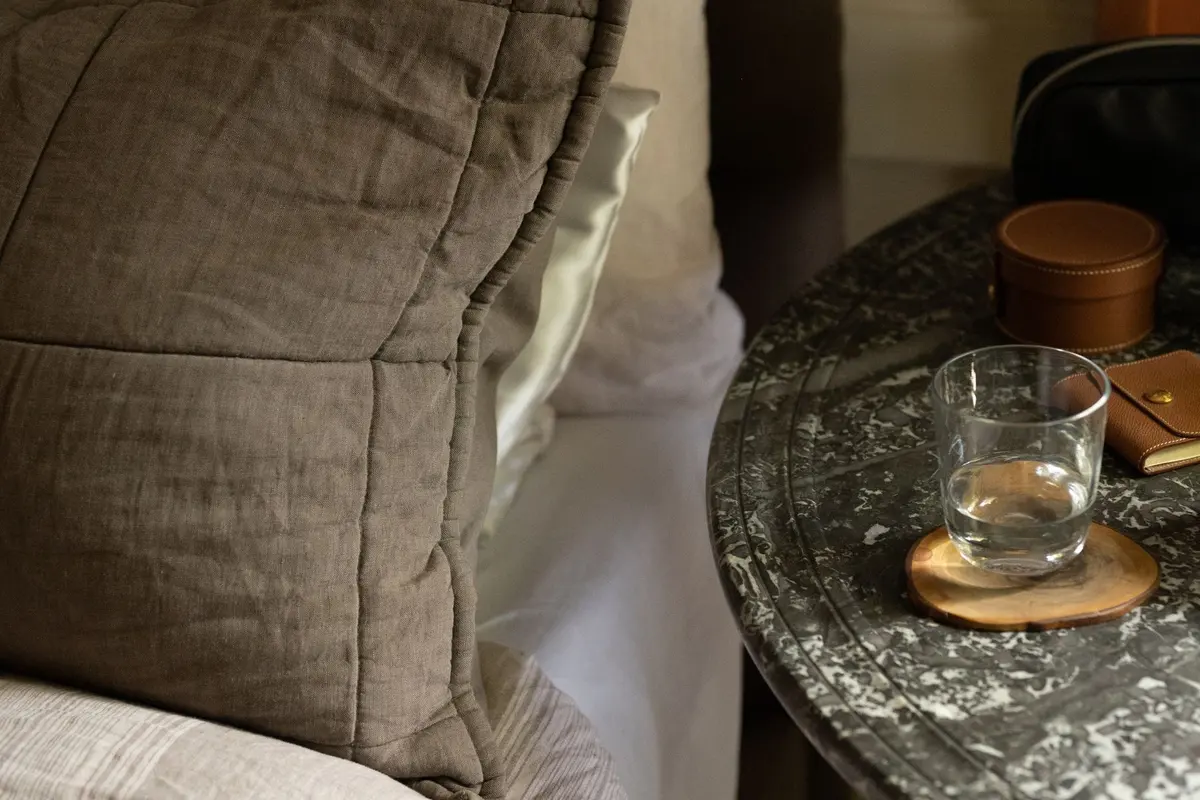
- A boring, low-light task if I'm still awake after 20 minutes. Lying in bed getting frustrated never worked. Sitting somewhere dim and doing something unstimulating, for me that's usually just sitting quietly with a glass of water, until I feel sleepy again works better than forcing it.
What didn't help me personally: going to bed earlier than usual (it just meant more time lying awake before the 3 AM wake-up), and alcohol in the evening, which made the first stretch of sleep feel deeper but made the waking itself worse. Both of those are common enough reports from other women that I don't think it's just me, though your experience may genuinely differ.
Sleep medicine organizations, including the American Academy of Sleep Medicine, point to cognitive behavioral therapy for insomnia (CBT-I) as the most well-supported non-drug approach to chronic sleep-maintenance problems like this one, and it's worth asking a doctor about if the steps above aren't enough on their own.
If caffeine timing is part of what you're adjusting, the slower, sit-down approach to meals I write about in Olive Oil, Fish, and Slow Meals is the same rhythm I credit with making an early caffeine cutoff feel less like a restriction and more like the natural end of the day.
Does What You Eat in the Evening Affect Perimenopause Sleep?
Yes, mostly through timing, alcohol, and caffeine rather than any single "sleep food." A large, rich meal close to bedtime keeps digestion busy while your body is trying to cool down for sleep, and alcohol, even a glass or two, tends to make the second half of the night lighter and more broken, which is exactly the stretch perimenopause already disrupts.
This is one place where the Mediterranean rhythm quietly helps. Where I live, the main meal is lunch. Dinner is usually light, often soup and bread, eaten a few hours before bed. That isn't a sleep strategy, it's simply how days tend to work here, but it means I'm rarely going to bed on a full stomach.
There's no strong evidence that any specific food fixes perimenopause insomnia, and I'd be wary of anything sold that way. What's better supported is the unexciting version: finish eating a few hours before bed, keep evening alcohol occasional rather than nightly, and keep caffeine to the morning and early afternoon. None of it is dramatic. It just removes a few extra things your sleep has to fight through.
Waking Up Isn't a Failure, and It Isn't Permanent
You didn't do anything wrong. Your hormones changed, and your sleep changed with them.
The version of this that helped me most wasn't a single fix, it was letting go of the idea that a 3 AM wake-up meant something had gone wrong. Most nights now, it's still there. It's just shorter, and it doesn't wreck the whole next day the way it used to.
This fits into the wider rhythm I write about in The Mediterranean Approach to Perimenopause, where sleep is one piece of a daily pattern, not something to solve in isolation from food, movement, and rest.
Frequently Asked Questions
Is waking up at the same time every night a hormone problem?
It can be. Falling progesterone reduces a natural calming effect on the brain, and shifting cortisol patterns during perimenopause can nudge early-morning waking earlier. It's not the only possible cause, so it's worth mentioning to your doctor if it's new and persistent.
Can I have perimenopause insomnia without hot flashes?
Yes. Sleep can fragment from hormonal changes alone, and some vasomotor activity is too mild to register as a recognizable hot flash even though it still disrupts sleep. Not feeling hot doesn't rule out a hormonal cause.
Should I worry about snoring or gasping for air at night during perimenopause?
Yes, that's worth raising with a doctor rather than dismissing as normal. The risk of sleep apnea rises around the menopause transition, and it needs a different kind of treatment than general insomnia advice.
Do sleep supplements actually work for perimenopause insomnia?
Evidence varies a lot by ingredient and by person, and none of them address the hormonal shift itself. Melatonin, magnesium, and herbal blends each have some research behind specific uses, but none is a proven fix for perimenopause sleep-maintenance problems, and they work better as one piece of a routine than as a first-line answer on their own.
How long does perimenopause sleep disruption typically last?
It varies widely and can continue through the menopause transition and into early postmenopause for some women, while others notice it easing once hormone levels settle. There isn't a single reliable timeline, which is part of why building sustainable habits matters more than waiting it out.
This article reflects personal lived experience and general research and is intended for educational purposes only. It is not medical advice. Please talk to your doctor about symptoms, diagnosis, or treatment decisions specific to your health, especially snoring, gasping, or breathing pauses during sleep.
Sources referenced: The Menopause Society (formerly NAMS); American Academy of Sleep Medicine.